


What Are Ajrakh Print Designs? Understanding Traditional Patterns in Detail
Ajrakh printing is a famous form of printing that is known to be alive for centuries. It still lives in our wardrobes because it has been passed down through hands in the workshops of Gujarat and Rajasthan. Each generation added a fresh perspective and made it a relevant part of our lives.
But do you know how to spot Ajrakh print designs? Deep geometric patterns, earthy tones and natural fabric, chances are you are looking at Ajrakh. In this blog, we will explore what Ajrakh printing actually is and what the history behind it is, the different patterns you might see and what makes this craft so special in the modern fashion world.
Where Ajrakh Comes From
Ajrakh print designs actually originates from the South region and has its strongest roots now in the Kutch district of Gujarat and some parts of Rajasthan. How can we forget to mention the preservers of the art, the Khatri community of artisans has been the primary custodian for generations.
If you’re wondering about the amusing sound of the term “Ajrakh,” you’re actually on the right track. It’s really unique because it is believed to derive from the Arabic azraq which means blue. The blue or indigo print is a nod to the deep indigo that is the limelight of the craft.
What Makes Ajrakh Print Designs Unique?
Ajrakh print designs are unique and special because of its process, not just patterns. It's a traditional block print process that involves using hand-carved wooden stamps and the dyes used are derived from natural sources. Major tones that you might spot are indigo for blue, madder root for red and pomegranate rind for yellow.
Wherein, the fabric goes through multiple stages of washing, drying and dyeing before the piece is ready for the slabs. The slow, intentional work is truly special. We’ve noticed that for centuries, Ajrakh was primarily an integral part of shawls and lungi. These were embraced by the pastoral communities of western India.
Today, urban women are embracing the idea of wearing Ajrakh print designs in the form of kurta sets, co-ord sets, shirts and A-line kurtis such as found at World of Toji.
The Four Patterns That Define Ajrakh
Ajrakh print designs are usually built around four core print motifs and each piece proudly displays its own character, its own visual rhythm, and its own way of sitting on the body.
Buta Print: The Language of Florals
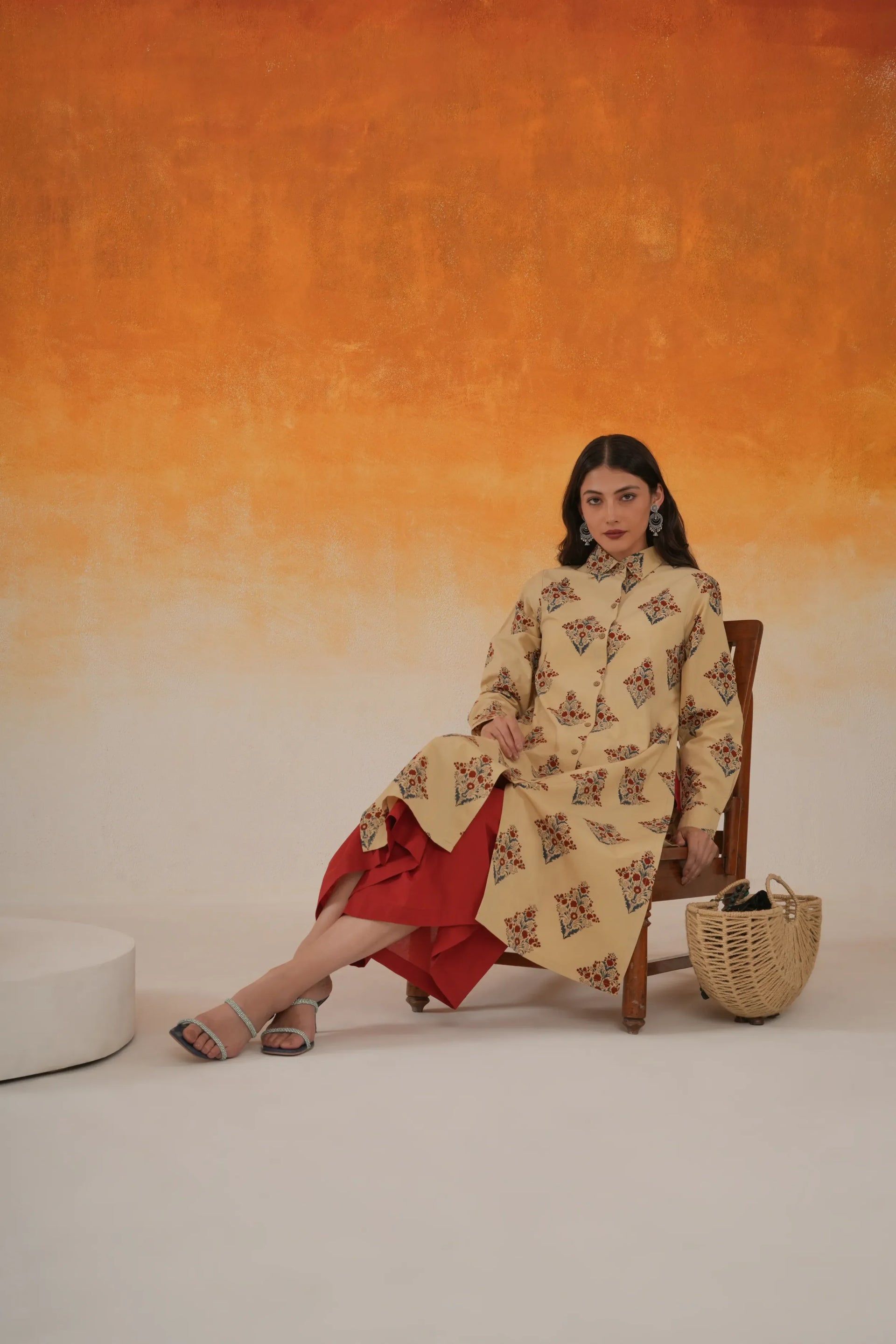
This particular pattern represents a floral or teardrop-shaped motif carrying its similar style. A substantial part of Indian textile traditions, buta’s geometric precision is not soft or flowing but intentional and structured. Its result was a pattern that feels wholesome and rooted in tradition.
The buta print makes an elegant statement without effort. It works particularly well on kurta sets and co-ord sets where the motif has space to repeat and build its visual story across the fabric.
Pine Print: Structure in Every Line
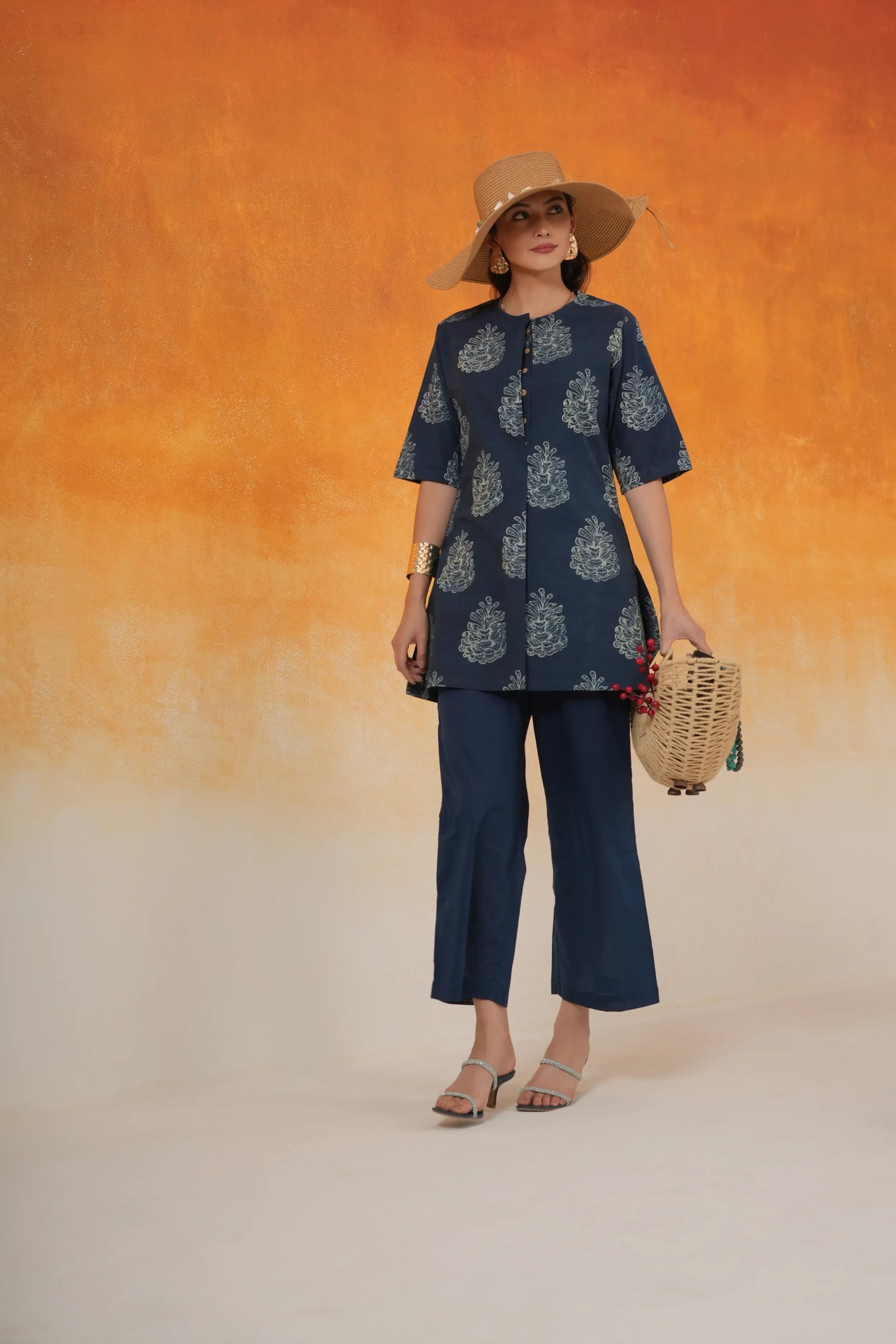
The Pine print takes its name from the tree, though what it really captures is a rhythmically geometric across the cloth. In Ajrakh, Pine patterns are clean and architectural. There is a sense of balance that makes it a vision that truly satisfies.
Pine print designs tend to photograph exceptionally well, which is part of why you will find them popular in shirts and coord sets. The pattern holds itself well whether you are at a work meeting or a weekend gathering.
Conch Print: Rooted in Something Older
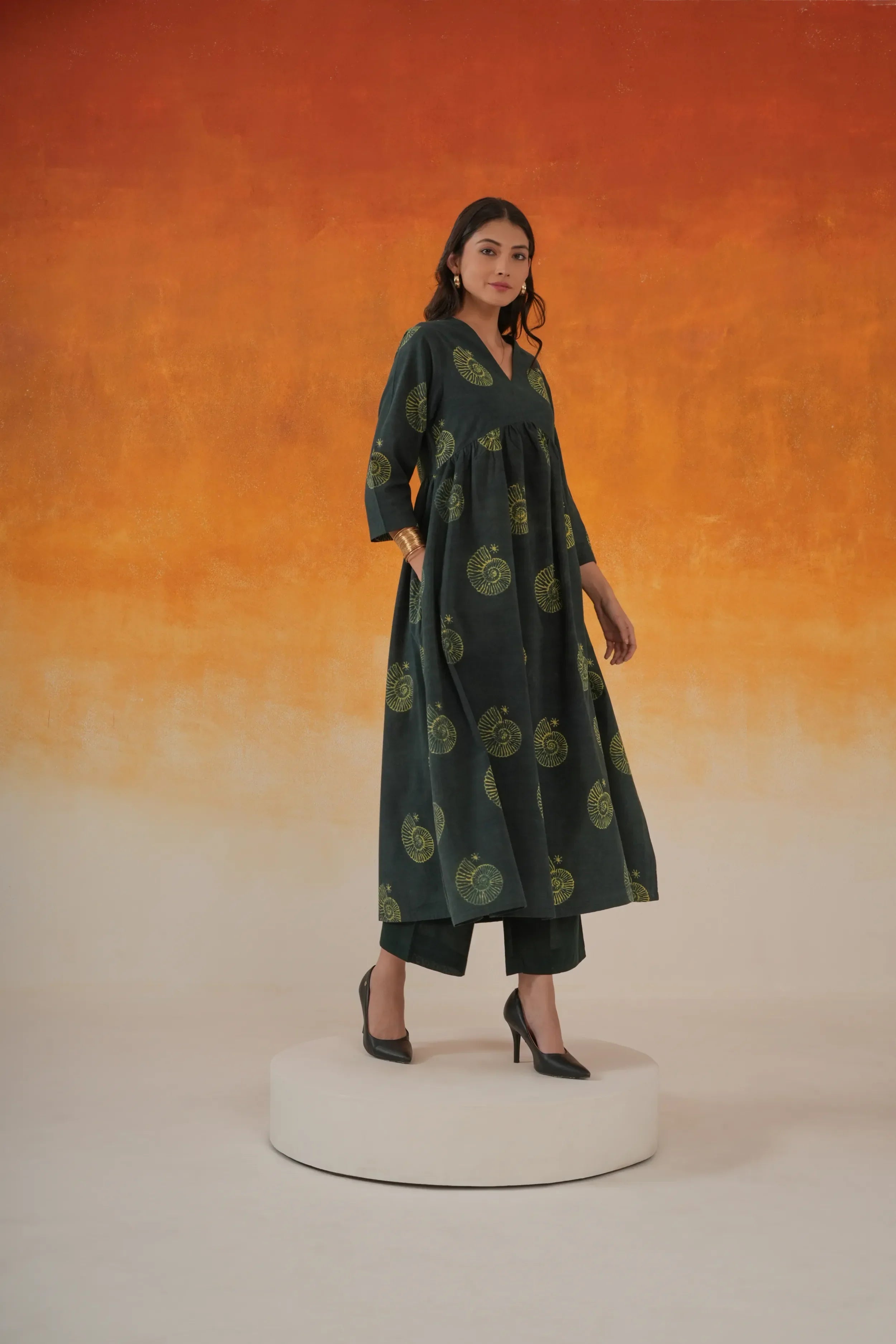
The conch print is usually known as the shankh and holds deep cultural and spiritual significance. It is believed to have travelled across the Indian subcontinent. A legacy of Ajrakh print motifs, which looks somewhat like a spiraled, shell-like form, conch print brings a softness to the craft.
Conch print designs tend to feel a little more celebratory without being overly formal. They work well in anarkali cuts and straight kurtas where the motif can flow through the silhouette with purpose.
Maple Print: Nature Brought into Structure
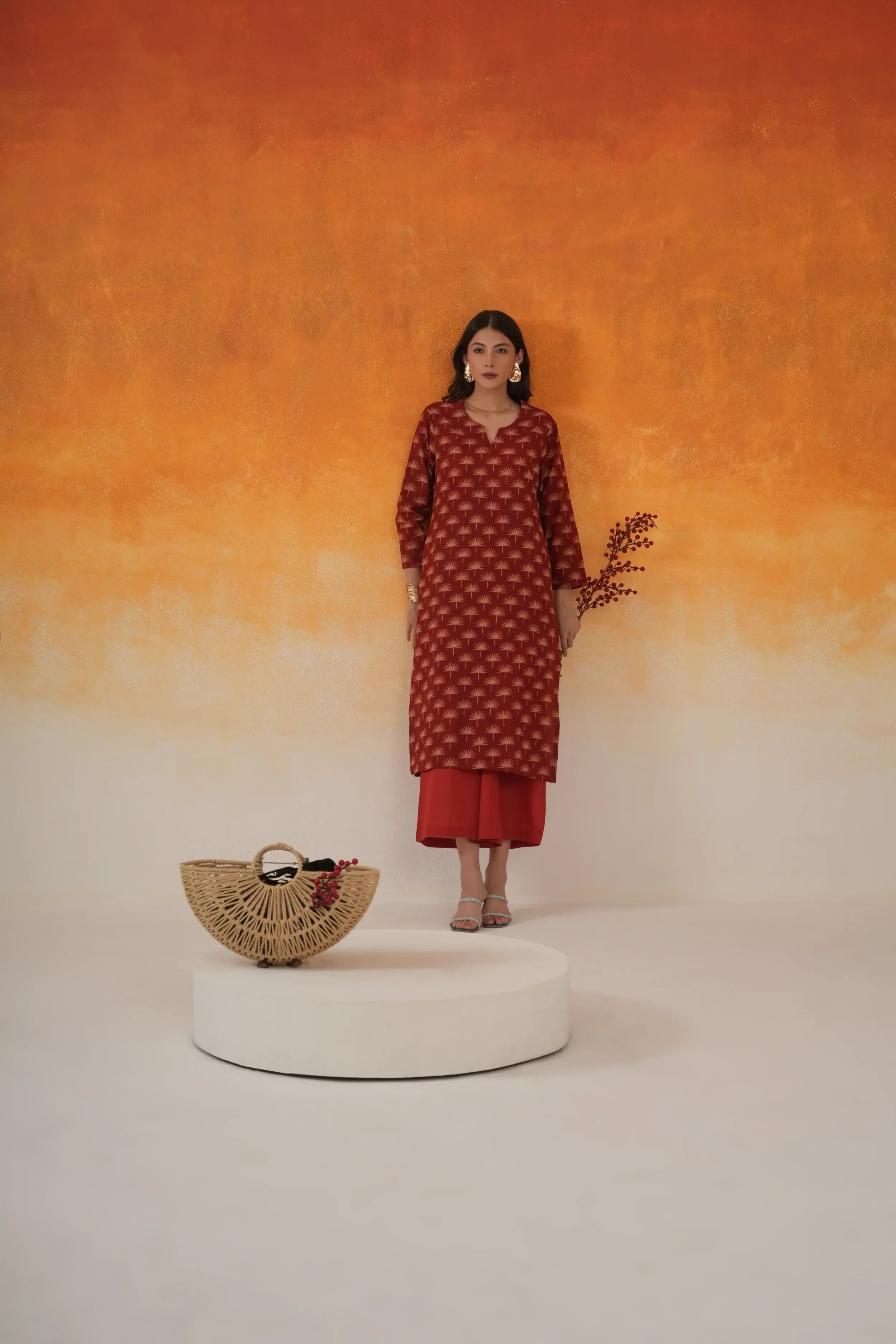
When it comes to the Maple motif, it draws inspiration from the natural world and adds life into the language of block printing. Known as one of the best contemporary patterns in the Ajrakh print designs, the leaf-like style adds a feeling of grounding and freshness.
Maple print pieces tend to bridge the gap between heritage and everyday wear very naturally. They feel right for daily use. Women wear the Ajrakh print designs proudly in the form of cotton kurta sets, A-line cuts, or layered with other clothing sets.
What Is the Process of Ajrakh Printing
A single Ajrakh piece goes through over a dozen steps, such as the following :
- Preparation of the fabric with natural mordants
- Resist printing with clay paste
- Immersion in dye baths
- Repeated washing
- Shade drying
The colours deepen with every pass. The patterns align through skilled hands, not machinery. The result is something no two pieces replicate exactly. There will always be minor variation in the depth of colour, the placement of pattern, the way the dye has settled.
At World of Toji, Ajrakh print designs also fits into our broader commitment to low-tox fashion. The natural dyes used in traditional Ajrakh like madder, indigo, pomegranate carry none of the chemical load that synthetic dyes do.
How to Wear Ajrakh Prints Without Overthinking It
Ajrakh print designs are more versatile than they initially appear.
- For casual wear: The geometric precision of the patterns means they pair well with solids. Take for instance, a block printed kurta top with plain cotton trousers, or a Conch print co-ord set worn together for a complete look that needs nothing else added.
- For formal wear: For work, a Pine print shirt tucked into straight trousers seems thoughtful and professional.
- For vacation wear: When traveling, a Maple A-line kurta set gives you coverage, comfort, and wholesome aesthetics with carefully chosen accessories.
The most important thing about styling Ajrakh is that it does not need a lot to look good.
Conclusion: A Craft Worth Choosing
Choosing Ajrakh is not just a style decision. It is a small act of support for a craft that deserves to continue. And on practical days, it is also just a very good-looking outfit. Thanks to the World of Toji, embracing it has become super easy.
Explore our Ajrakh collection at World of Toji with kurta sets, co-ord sets, anarkali cuts, and shirts, all block printed with natural dyes on 100% cotton.
FAQs : Ajrakh Print Designs
Q1. What is Ajrakh print design?
Ajrakh print is an ancient form of hand block printing on textiles which originates from the Kutch district of Gujarat and particular regions of Rajasthan.
Q2. What type of motifs are used in Ajrakh?
Geometric patterns such as leaf-like shapes and floral patterns are primary motifs that are part of Ajrakh prints.
Q3. How to identify the real Ajrakh?
Firstly, look for natural dye tones and touch to check the softness of the fabric. Artisans usually use breathable fabrics for Ajrakh print designs. Make sure you notice small imperfections and examine both sides.
Q4. What colours are used in Ajrakh print?
The commonly used colours in Ajrakh are red, blue, green and ivory. However, the colour palette is not restricted and artisans usually experiment with new earthy hues.
Q5. What is Ajrakh print famous for?
Ajrakh print is known for its rich, traditional and cultural significance. The subtle yet elegant patterns have been practiced for over 5,000 years and to this day, proudly combine hand-block techniques and sustainable dyeing methods featured on rich fabrics.


